
شبیهسازی دقیق ساخت افزایشی آلیاژ Inconel 718 در پژوهش عضو هیأت علمی گروه مهندسی مکانیک
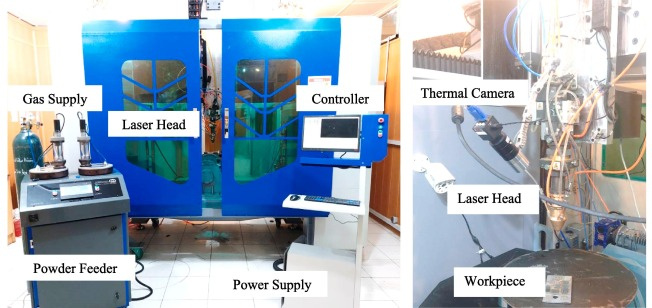
در این پژوهش، روشی جدید برای شبیهسازی فرآیند Laser Additive Manufacturing ارائه شده است که به کمک آن شکل هندسی حوضچه مذاب و لایه پوششی ایجاد شده در فرآیند رسوبدهی فلز با لیزر مورد بررسی قرار میگیرد. در این روش، پدیدههای پیچیده فیزیکی به اجزای سادهتر تفکیک شده و نتایج حاصل از انتقال جرم، انتقال حرارت پایا و فرآیند ذوب و انجماد در هر گام زمانی با یکدیگر کوپل شدهاند.
در گام نخست، توان خالص منتقلشده به سطح با استفاده از تحلیل معکوس محاسبه و به عنوان منبع حرارتی جریان پایا در مدل اعمال شد. در گام بعدی، با انجام آزمایشهای تجربی، دبی جرمی پودر اندازهگیری گردید تا جرم رسوب ایجاد شده و هندسه نهایی لایه پوششی با استفاده از روش حجم سیال (VOF) پیشبینی شود. همچنین برای بررسی اثر پارامترهای فرآیند شامل توان لیزر، سرعت اسکن، نرخ تغذیه پودر و قطر پرتو، از روش سطح پاسخ (RSM) استفاده شد.
نتایج نشان داد که تفکیک مدل به اجزای سادهتر، در مقایسه با حل کاملاً کوپلشده، باعث کاهش قابل توجه حجم محاسبات و افزایش دقت ردیابی خطاها میشود. همچنین نتایج شبیهسازی و آزمایشها نشان داد افزایش توان لیزر و نرخ تغذیه پودر موجب افزایش ابعاد لایه پوششی میشود، در حالی که افزایش سرعت اسکن باعث کاهش ابعاد این لایه خواهد شد. تطابق مناسب میان نتایج مدلسازی و دادههای تجربی نیز اعتبار روش ارائهشده را تأیید کرد.
Title
A new approach to evaluation of bead geometry and cladded layer in laser additive manufacturing of Inconel 718 using the experimental design, inverse analysis and numerical simulation
Abstract
In this article, a new approach is presented to simulate the laser additive manufacturing process of Inconel 718 and to evaluate the geometric shape of the molten pool and the cladding layer. For this purpose, complex physical phenomena have been converted into simpler components and the results obtained from the solution of mass transfer, steady state heat transfer, and melting and solidification have been coupled in each time step. In the first stage, the net power delivered to the surface was calculated by the inverse analysis, then this net power was applied to the model as a steady flow heat source. In the second stage, the mass flow rate was measured by experimental tests to estimate the mass of the deposited bead and the final geometry of the clad using the volume of fluid (VOF) method. In addition, response surface method (RSM) was used to evaluate the effect of the parameters of laser power, scanning speed, powder feeding rate and beam diameter on the geometric dimensions of the cladding layer and maximum temperature of the molten pool. The results showed that the separation of the model into simpler components significantly reduced the amount of calculations compared to the coupling solution and the error factors can be traced more accurately. The simulation and experimental results indicated that increasing the laser power and powder feeding rate has increased the dimensions of the cladding layer, but increasing the scanning speed has reduced the dimensions of the cladding layer. Moreover, the dimensions of the cladding layer obtained from the simulation model were in good agreement with the experimental results.
Keywords Laser additive manufacturing; Inconel 718; Cladding layer; Molten pool; Inverse analysis; Response surface method; Numerical simulation
این مقاله در جولای سال ۲۰۲۵ در ژورنال بینالمللی Optics & Laser Technology منتشر شده است.
نظر شما :