
انتشار مقاله عضو هیأت علمی درباره بررسی عددی اثر آلودگی پودر سیاه بر عملکرد و دقت کنتورهای توربینی گاز

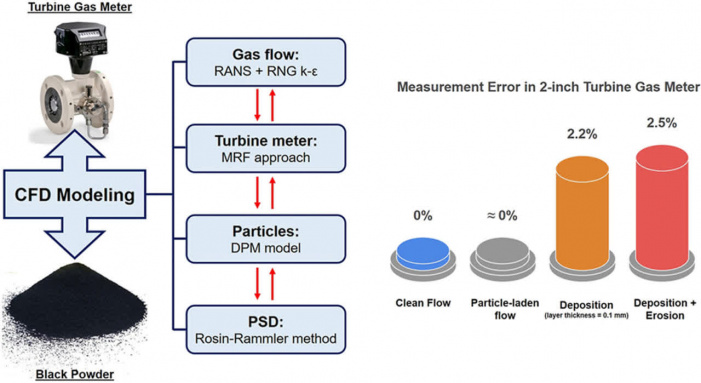
در این پژوهش، با توجه به اهمیت دقت اندازهگیری جریان گاز در سیستمهای انتقال و نقش آلودگیها بهویژه پودر سیاه بهعنوان محصول جانبی خوردگی خطوط لوله، یک چارچوب دینامیک سیالات محاسباتی (CFD) اعتبارسنجیشده مورد استفاده قرار گرفت. این مدل با ترکیب روش چارچوب مرجع متحرک (MRF) و مدل فاز گسسته دوطرفه (DPM)، عملکرد کنتور را در چهار حالت شامل جریان تکفاز، جریان حاوی ذرات، رسوبگذاری و اثرات همزمان رسوبگذاری و فرسایش مورد ارزیابی قرار داد.
نتایج نشان داد که حضور ذرات معلق بهتنهایی تأثیر قابلتوجهی بر دینامیک روتور ندارد، اما رسوب ذرات ریز باعث تغییر تدریجی هندسه پرهها، افزایش آشفتگی جریان و ایجاد خطای مثبت پایدار در اندازهگیری میشود. همچنین در نظر گرفتن همزمان پدیده فرسایش موجب ناپایداری بیشتر جریان، افزایش سرعت روتور و بیشبرآوردی اندازهگیری تا حدود ۲٫۵ درصد میگردد. مقایسه نتایج مدل با دادههای کالیبراسیون واقعی نشاندهنده میانگین خطای مطلق ۱٫۲ درصد است. این یافتهها نشان میدهد که تغییرات تجمعی سطحی ناشی از رسوب و فرسایش، عامل اصلی انحراف در اندازهگیری بوده و میتواند مبنایی برای توسعه روشهای اصلاحی و راهکارهای کنترل آلودگی در سامانههای انتقال گاز طبیعی فراهم آورد.
Title
Black Powder Contamination in Turbine Gas Meters: A Comprehensive Numerical Study of Particle Transport, Deposition, and Erosion Impacts on Measurement Accuracy.
Abstract
Accurate gas flow measurement in transmission systems is strongly affected by contamination, with black powder, a corrosive by-product of pipeline degradation, representing a major challenge for turbine meters. In this study, a validated computational fluid dynamics (CFD) framework combining a moving reference frame (MRF) and a two-way coupled discrete phase model (DPM) is employed to evaluate meter performance under four representative scenarios: (1) single-phase gas flow, (2) particle-laden flow, (3) deposition, and (4) combined deposition–erosion. Model predictions were benchmarked against full-scale calibration data, yielding a mean absolute error of 1.2%. Results demonstrate that suspended particles alone exert negligible impact on rotor dynamics, whereas deposition of fine particles systematically alters blade geometry, intensifies turbulence, and induces a persistent positive bias in flow measurement. Incorporating erosion further destabilizes the flow, increases rotor speed, and results in a systematic over-reading of up to +2.5%. These findings highlight that the dominant mechanism of measurement deviation is cumulative surface modification rather than instantaneous particle loads. The outcomes provide new insights into contamination-induced bias in gas metering and establish a foundation for predictive correction strategies and contamination control in natural gas transmission systems.
خاطر نشان میگردد این مقاله در مارس سال ۲۰۲۶ در ژورنال بینالمللی Flow Measurement and Instrumentation چاپ شده است.

نظر شما :