
انتشار مقاله عضو هیأت علمی گروه مهندسی مواد در حوزه الکتروشیمی و مواد اصلاحشده برای بهبود عملکرد الکترودها
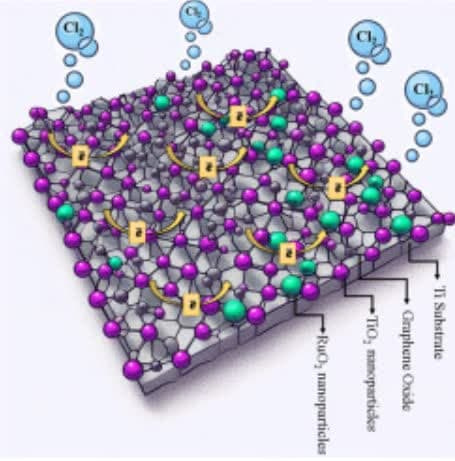
در این مقاله، پوشش TiO2-RuO2 اصلاحشده با گرافن اکسید (GO) و گرافن اکسید کاهشیافته (rGO) روی تیتانیوم با استفاده از تکنیک سل-ژل سنتز و اصلاح شد. آند پایدار ابعادی (DSA) با استفاده از روششناسی سطح پاسخ (RSM) مدلسازی و بهینهسازی شد. مساحت سطح فعال الکتروشیمیایی (ECSA) ارزیابی گردید و با استفاده از تحلیلهای XRD، FTIR، XPS، FE-SEM، AFM، TEM و CV ویژگیهای پوششها بررسی شد. نتایج نشان داد که انتخابپذیری الکترود تا ۵.۸ برابر بیشتر از DSA افزایش یافته و چگالی تبادل بار برای الکترودهای بهینهشده 212.278 و 215.14 mC·cm−2 است که نشاندهنده دقت مدل بهینهشده است.
Title
Characterization and modeling of the active surface area on TiO2-RuO2 anode modified by graphene oxide/reduced graphene oxide in the chlor-alkali process by RSM
Abstract
The sol-gel technique was used to investigate the facile synthesis and modification of TiO2-RuO2 coating by graphene oxide (GO) and reduced graphene oxide (rGO) on titanium. Modeling and optimization of the dimensionally stable anode (DSA) were performed using response surface methodology (RSM). The electrochemical active surface area (ECSA) as an intrinsic factor was evaluated. Finally, the analyses of XRD, FTIR, XPS, FE-SEM, AFM, TEM, and CV were used to assess the applied coatings. The results indicated that the selectivity concept of the electrode, which reveals the extrinsic property, could be increased up to 5.8 times more than the DSA. The exchange charge density predicted by the model for the optimized and re-synthesized electrodes were 212.278 and 215.14 mC·cm−2 respectively, which indicates the reliability of the developed model.
Keywords Graphene oxide, RuO2-TiO2 coating, Electrocatalysis, Design of experiments.
خاطر نشان میگردد این مقاله در بهمن ماه سال 1402 در ژورنال Diamond & Related Materials چاپ شده است.
شناسه DOI مقاله:
نظر شما :