
انتشار مقاله عضو هیأت علمی درباره معرفی فرآیند نوین اکستروژن برشی ساده بههمراه امواج فراصوت در تولید مس فوقریزدانه

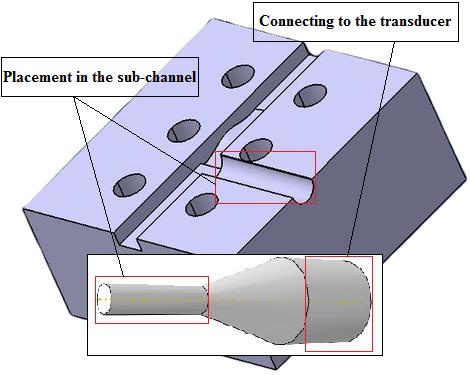
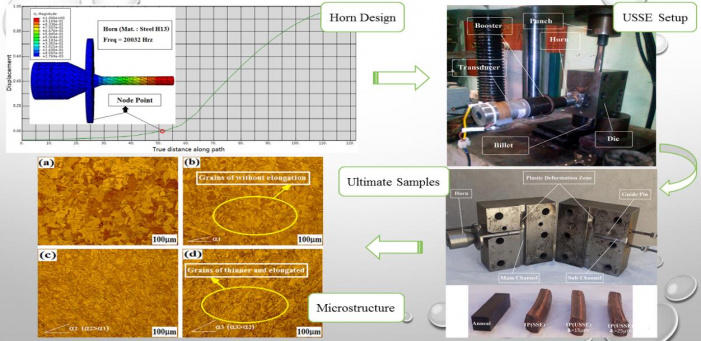
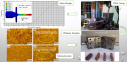
در این پژوهش، بهمنظور تقویت و انتقال مؤثر ارتعاشات فراصوت، یک هورن استوانهای–مخروطی–استوانهای با استفاده از تحلیل مودال در نرمافزار Abaqus طراحی شد و فرکانس تشدید ۲۰٫۳۳۲ کیلوهرتز با دو دامنه ۱۵ و ۲۵ میکرومتر مورد استفاده قرار گرفت. سپس ریزساختار و خواص نمونههای مس خالص تولیدشده پس از پاس اول در حالتهای با فراصوت و بدون فراصوت مورد مقایسه قرار گرفت.
نتایج نشان داد که در فرآیند اکستروژن برشی ساده همراه با فراصوت (USSE)، کاهش اندازه دانه بهترتیب حدود ۵۴ درصد و ۶۵ درصد برای دامنههای ۱۵ و ۲۵ میکرومتر حاصل شده است. همچنین افزایش قابلتوجهی در مقادیر ریزسختی نسبت به فرآیند معمول SSE مشاهده شد که بیانگر افزایش سختی با افزایش دامنه ارتعاشات تحت تأثیر پدیده سختشدن آکوستیکی است. از سوی دیگر، نیروی مورد نیاز برای اکستروژن در حضور امواج فراصوت کاهش یافته که ناشی از پدیده نرمشدن آکوستیکی است. شبیهسازی اجزای محدود هر دو فرآیند SSE و USSE در نرمافزار Abaqus/Explicit انجام شد که نتایج آن افزایش کرنش پلاستیک معادل و یکنواختی بهتر توزیع کرنش در طول نمونه در روش USSE را تأیید میکند. این دستاوردها نشاندهنده ظرفیت بالای این فرآیند نوین در بهبود خواص مکانیکی و ریزساختاری مواد فلزی است.
Title
A New Ultrasonic-Assisted Simple Shear Extrusion Process in Production of Ultrafine Grained Copper.
Abstract
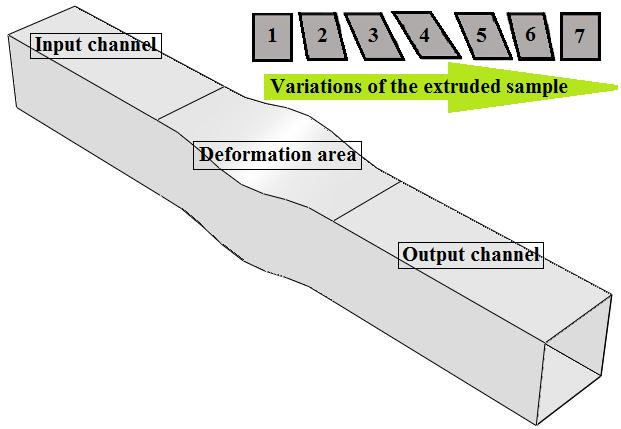
In this research, a hybrid method of a simple shear extrusion (SSE) process is proposed with simultaneous application of ultrasonic vibrations at the beginning of the deformation zone in pure copper. A cylindrical–conical–cylindrical horn was designed to amplify and transmit the ultrasonic vibrations using modal analysis in Abaqus. The resonant frequency of 20.332 kHz was used with two amplitudes of 15 and 25 micrometers. The produced ultrafine-grained copper samples after the first pass with and without ultrasonic vibrations were compared. A 54% and 65% reduction in grain size were reported in ultrasonic-assisted simple shear extrusion (USSE) with amplitudes of 15 μm and 25 μm, respectively. A significant increase in microhardness values in the USSE method compared to the SSE method indicated that hardness increases by increasing the vibration amplitudes under the influence of acoustic hardening. In addition, the required extrusion force decreased in the presence of ultrasound due to acoustic softening. Finite element simulations of both SSE and USSE processes were performed in Abaqus/Explicit, showing higher equivalent plastic strain and improved plastic strain distribution along the sample length in the USSE method.
Keywords simple shear extrusion; ultrasonics; acoustic hardening; acoustic softening; mechanical properties; microstructural properties.
گفتنی است این مقاله در آوریل سال ۲۰۲۵ در ژورنال International Journal of Engineering چاپ شده است.

نظر شما :